Synopsis
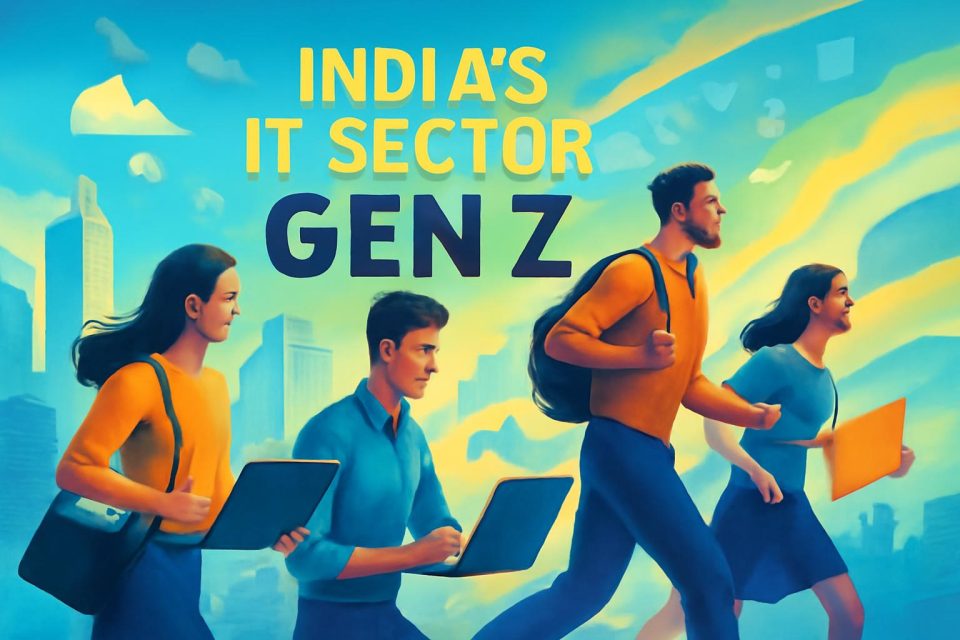
India's IT sector is experiencing a surge in replacement hiring. Gen Z professionals are leaving jobs at a faster rate, prompting companies to revise their strategies. This shift impacts hiring, onboarding, training, and retention efforts. Companies are adapting by increasing contractual roles and focusing on faster onboarding and continuous reskilling to manage workforce evolution.Listen to this article in summarized format
Average Gen Z tenure is just 1.1 years, down nearly 39% from 1.8 years for millennials, according to multiple staffing firms.
About 35-40% of Gen Z hiring across the broader IT sector is now replacement-driven, up from 20-25% two years ago, while in IT services, 55-60% of entry-level hiring is now driven by replacements, experts said.
Shorter tenures are also aided by a shift in strategy, with companies adopting more flexible, capability-driven hiring amid artificial intelligence (AI)-led disruptions.
“What we are seeing is less a Gen Z churn problem and more a structural evolution of the workforce,” said Vikram Ahuja, cofounder of ANSR. “Companies are becoming far more deliberate in how they build capability. The model is evolving from linear hiring to building long-term, capability-driven talent engines.”
The sharpest drop in tenure expectations is visible in global capability centres (GCCs) and niche product roles.
“Faster project cycles and strong demand for specialised skills are leading to quicker role switches,” said Sachin Alug, CEO of NLB Services.
Attrition is particularly high in AI, cloud, cybersecurity and platform engineering roles, where talent shortages are severe, he said. “Professionals in these segments tend to switch jobs more frequently because they have multiple opportunities,”
GCCs currently face skill gaps of 38-42% in AI and data roles, 32-36% in platform engineering and 28-32% in cloud infrastructure, according to Quess Corp.
Across IT services, GCCs and product companies, most Gen Z employees are staying only 18-24 months before moving on.
The pattern differs across segments of the IT industry.
In IT services, Gen Z attrition is around 20%, with average entry-level tenure at 1.4-1.6 years, according to TeamLease Digital. Product companies are retaining younger workers for slightly longer, around 1.8-2 years, because the work tends to be more hands-on from the start.
GCC exits are often planned, with Gen Z professionals moving on “for credential-harvesting” after gaining enough skills or credentials, Neeti Sharma, CEO of TeamLease Digital, said. “IT services exits are earlier and more reactive, driven by a gap between hiring promises and delivery reality,” she said. “Product companies hold them a little longer because the work tends to be more hands-on from day one.”
Strategy tweaks
Companies are redesigning workforce strategies around the assumption that younger employees may not stay for long, increasing contractual and project-based hiring and speeding up onboarding and training.
“Many companies are structuring entry-level roles around 12-24-month cycles to match shorter tenures,” Alug said. “This is leading to quicker hiring, more structured onboarding and modular training that builds job-ready skills early.”
Contractual hiring now accounts for 25% of GCC roles, up from 18% two years ago, according to Quess Corp
Staffing firms said companies are also increasing the use of contract-to-hire models, internal mobility programmes and structured learning pathways to improve retention.
“Companies are responding in a more practical way, with a noticeable shift towards contract-to-hire and project-based staffing,” Alug explained. “The priority is to keep roles filled and teams running smoothly despite higher movement.”
Sanketh Chengappa, director at Adecco India, said companies are also moving towards faster digital onboarding, microlearning and continuous reskilling as demand shifts toward candidates with early experience or AI skills.
“Entry-level openings and campus hiring have slowed, while reliance on flexible staffing has increased and a growing share of hiring is now replacement-driven as Gen Z tenure drops below 24 months,” he said.
Onboarding and training are becoming faster and more digital, with shorter learning modules, personalised pathways and continuous upskilling, Chengappa added.
Data from Quess shows companies that invest in structured learning pathways of six to nine months are seeing nearly 30% better retention, suggesting that for India’s IT sector, retaining Gen Z employees may increasingly depend on giving them reasons to stay rather than expecting them to.